ServicesWater Softeners
Water Softeners in Lake Geneva
We install metered water softeners sized to how your home actually uses water, so scale stops collecting in your water heater, on your faucets and in your dishwasher. Many families schedule the work in fall, ahead of the months when the heater runs hardest.
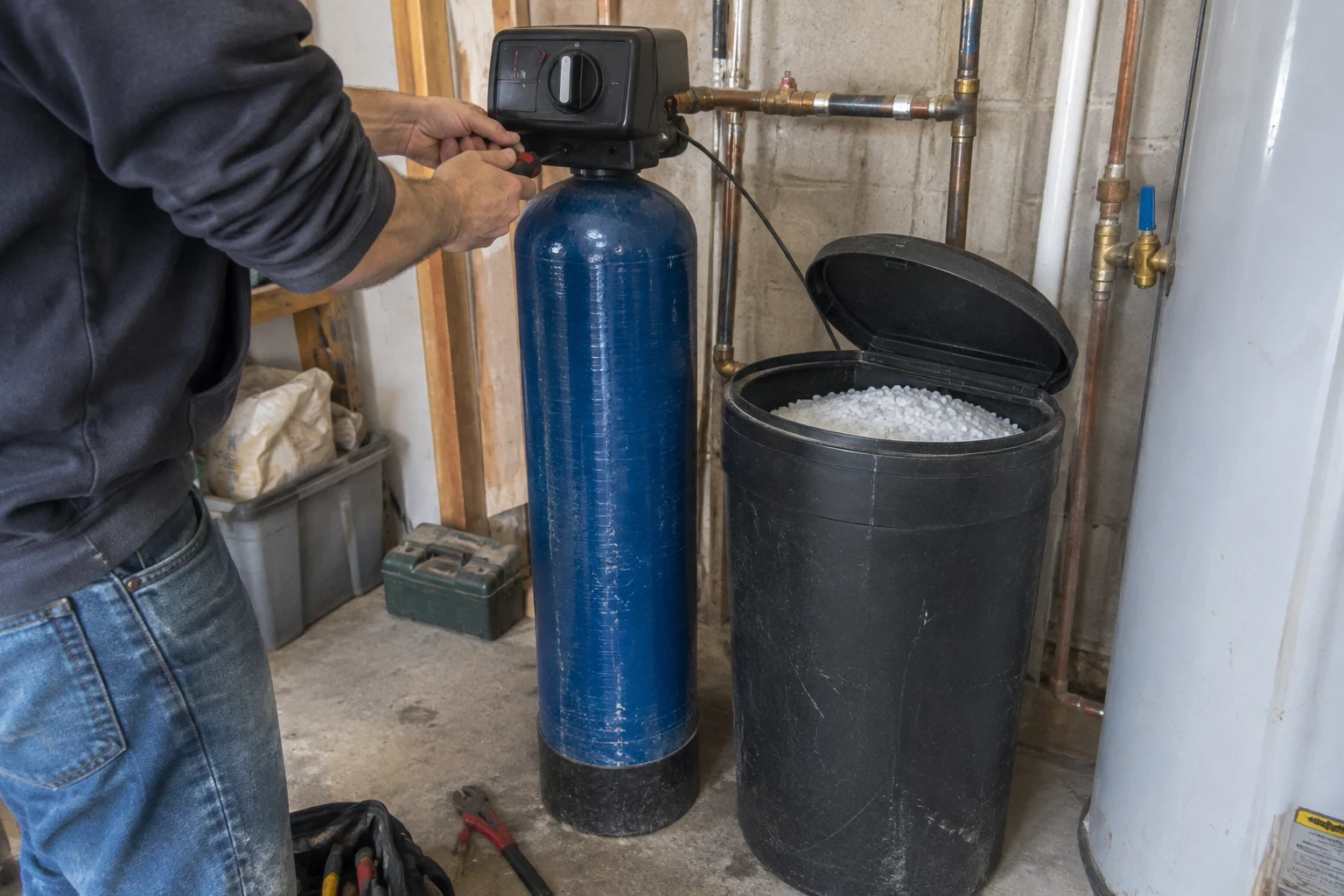
How softening protects your home
Hard water carries dissolved calcium and magnesium that you rarely see in a cold glass. Heat changes that. As the water warms, the minerals drop out and harden, which is why scale shows up first in kettles, on showerheads and across the bottom of the water heater. A softener exchanges those minerals inside a tank of resin beads, before the water reaches a single faucet.
Getting the fit right matters more than buying the biggest unit. A tank that is too large spends extra salt and water each time it regenerates, while one that is too small can run dry in the middle of a busy morning. We work from the number of people in your home, how much water you use each day and how hard your supply is, then set the control valve so it regenerates only after its capacity has been used.
Some homes want more than soft water. If you are after cleaner-tasting drinking water or you draw from a private well, a softener often pairs with our reverse osmosis or well water treatment work. When a softener on its own will do the job, we say so.
What the installation includes
A metered control valve
The valve tracks gallons used and regenerates on demand rather than on a fixed timer. That keeps salt and water use in line with your household.
Resin tank and brine tank
We set both on a level, dry spot near your main line, with room left to add salt without stooping into a corner.
Bypass valve
A bypass lets you shut the softener out of the system in seconds, useful for service or for filling a pool or garden tank with untreated water.
Drain line with an air gap
Rinse water from each regeneration goes to a floor drain or standpipe. We leave an open gap above the drain so used water has no path back into the lines that feed your taps.
Programming and a walkthrough
We set hardness, household size and regeneration time, then show you how to read the display, check salt and use the bypass.
Cleanup
Cut pipe, packaging and fittings leave with us. We wipe down the work area and check every joint for drips before we go.
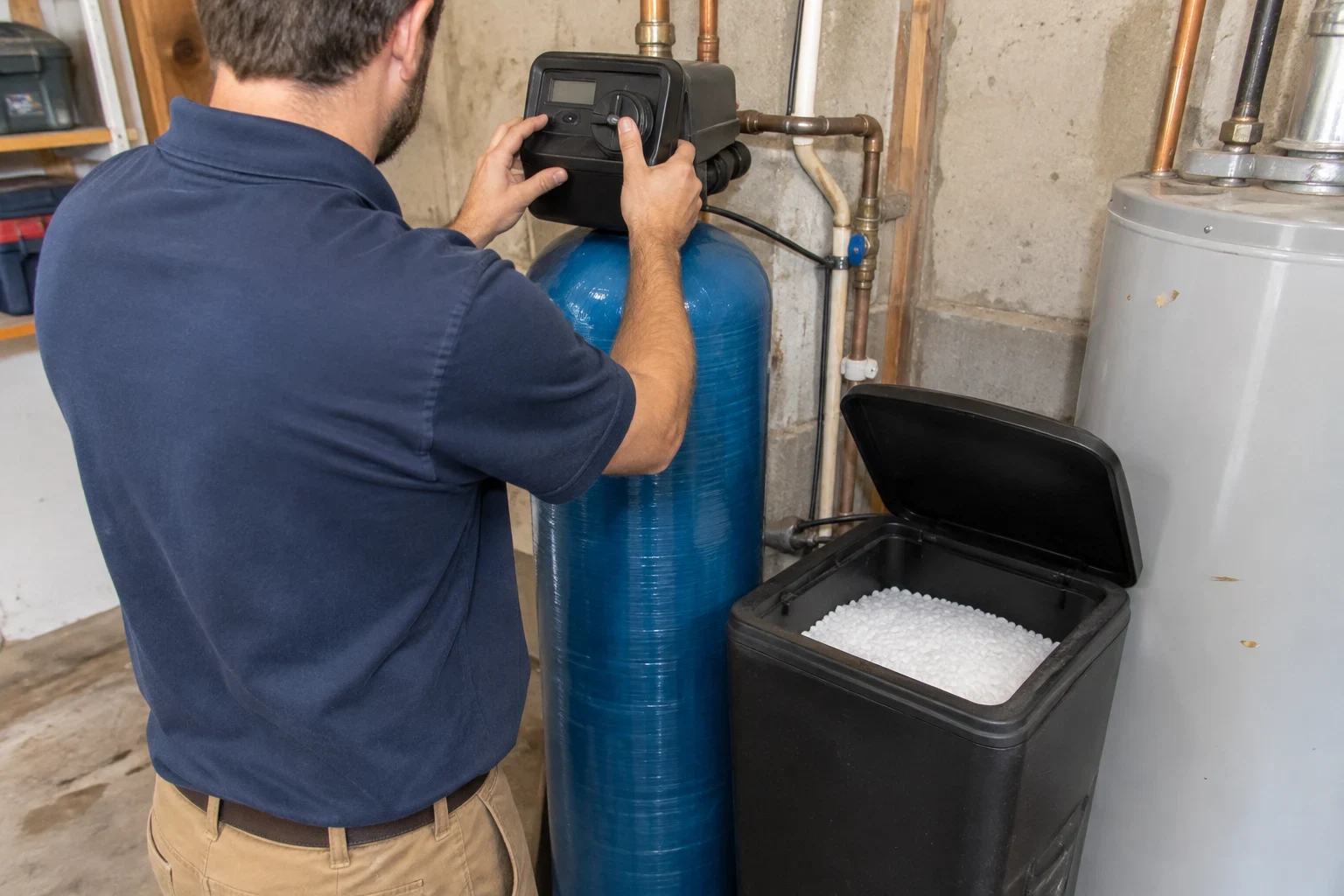
When hard water is telling you something
- Chalky rings on faucets
- A pale, gritty edge around aerators and showerhead nozzles that comes back a week or two after you scrub it is mineral scale settling out of the water.
- Cloudy glassware
- Glasses that leave the dishwasher with a dull film are usually reacting to the water, not to the detergent you chose.
- A water heater that pops or rumbles
- Crackling or a low knock when the burner lights often means scale has formed a layer at the bottom of the tank, trapping heat beneath it. The sound tends to grow through winter, as the heater cycles more often.
- Soap that barely foams
- Needing twice the shampoo or dish soap, along with scratchy towels and laundry that looks tired, are among the most common hard water complaints.
- An aging softener falling behind
- When the salt level hardly drops or scale starts returning, the resin bed or the control valve may have reached the end of its working life.
How the work goes
- 1
A conversation by phone
Tell us about your home, how many people live there and what you are seeing. We can talk through financing and set up a free quote.
- 2
A visit to size the system
We look at your main line, drain options and water heater location, then size the unit. Your written quote holds for 30 days.
- 3
Installation day
We shut off the water, plumb in the bypass and softener, run the drain line and load salt. Water is usually off for only part of the visit.
- 4
Startup and walkthrough
We flush the resin, program the valve and walk you through it. Full payment is due when the install is complete, not before.
What shapes the price
Every quote is written for your home after we have seen the plumbing. The numbers move with a handful of practical things, and we explain each one on the quote.
- Capacity
- Larger households and harder water need more resin and a larger tank.
- Plumbing access
- A ready-made softener loop is quicker to tie into than a finished basement where we need to reroute the main line.
- Drain location
- A floor drain close by keeps the job simple. A longer run or a standpipe adds material and time.
- Pairing with other treatment
- Adding a carbon stage or iron filter, or combining with whole-home filtration, changes equipment and labor.
Questions about water softeners
- Can I pay over time?
- Yes. We offer financing through U.S. Bank Avvance, on approved credit. Ask about it when you phone, and we will walk through how it works before anything is scheduled.
- How often will I add salt?
- That depends on how hard your water is and how much your household uses. Most homes top off the brine tank with a bag or two on a regular rhythm, and a metered valve keeps that rhythm steady. We show you how to check the level with a quick look under the lid.
- Why install before winter?
- Cold incoming water makes your water heater work longer through the winter months, and that is when scale builds fastest. Having the softener in place first protects the heater through its hardest stretch. A fall install also means carrying equipment in on dry ground rather than through snow.
- Will my outdoor spigots be softened?
- Usually we leave hose bibs on hard water. Lawns and gardens have no need for softened water, and keeping them off the softener saves salt. If you would rather have them included, we can talk it through.
- Is there a window to back out once I sign?
- Yes. You have three business days after you sign to cancel. Before signing, your written quote stays good for 30 days, so there is no pressure to decide on the spot.
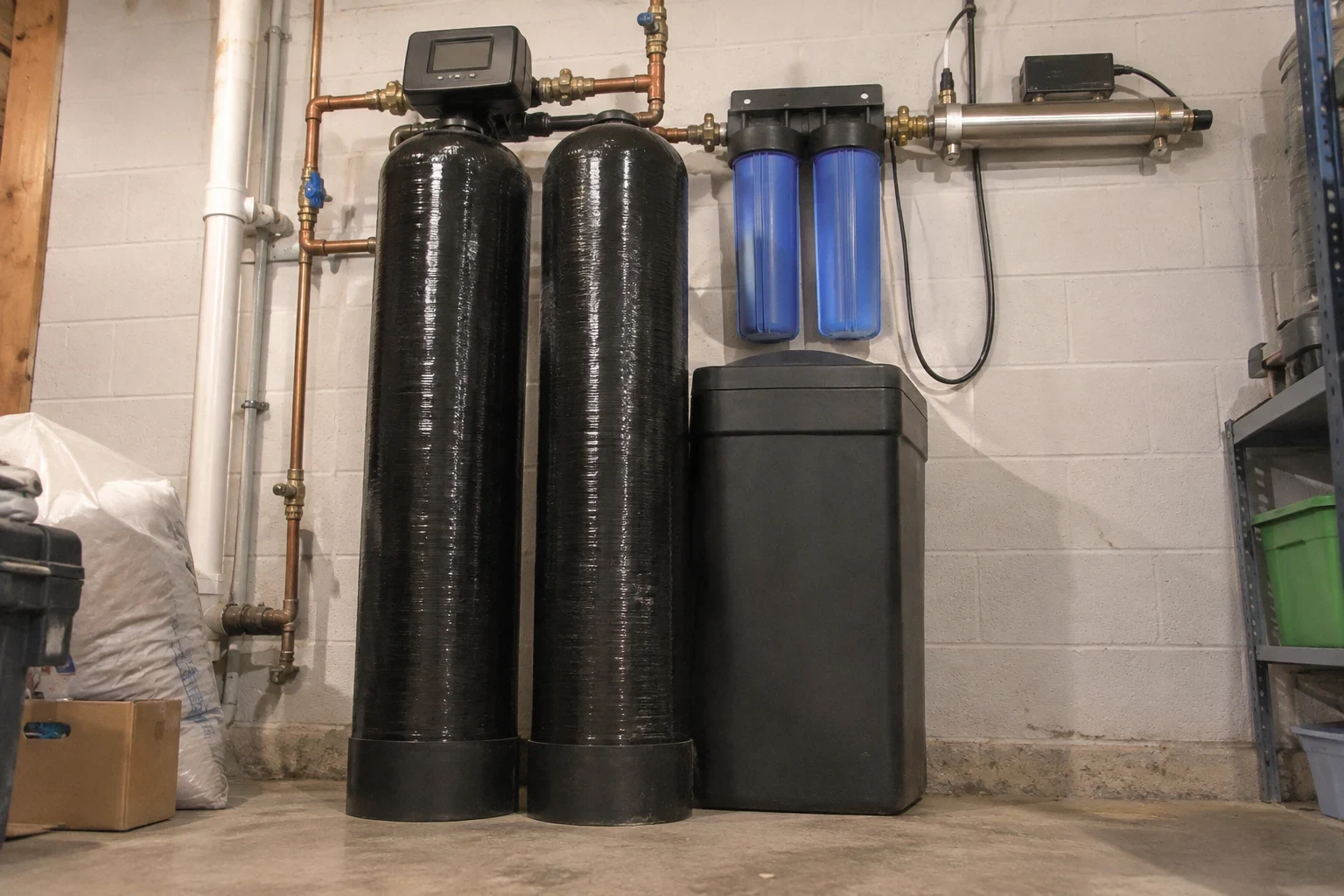
Get your softener in before the cold
We serve Lake Geneva and nearby towns such as Elkhorn, Williams Bay and Walworth. One call gets you a free quote and clear answers on financing.