ServicesWell Water Treatment
Well Water Treatment in Lake Geneva
A private well brings its own mix of hardness, iron and sometimes a sulfur smell. We design and install well water treatment that handles what your water actually carries, sized to your pump and your household, and in place before the season ahead.
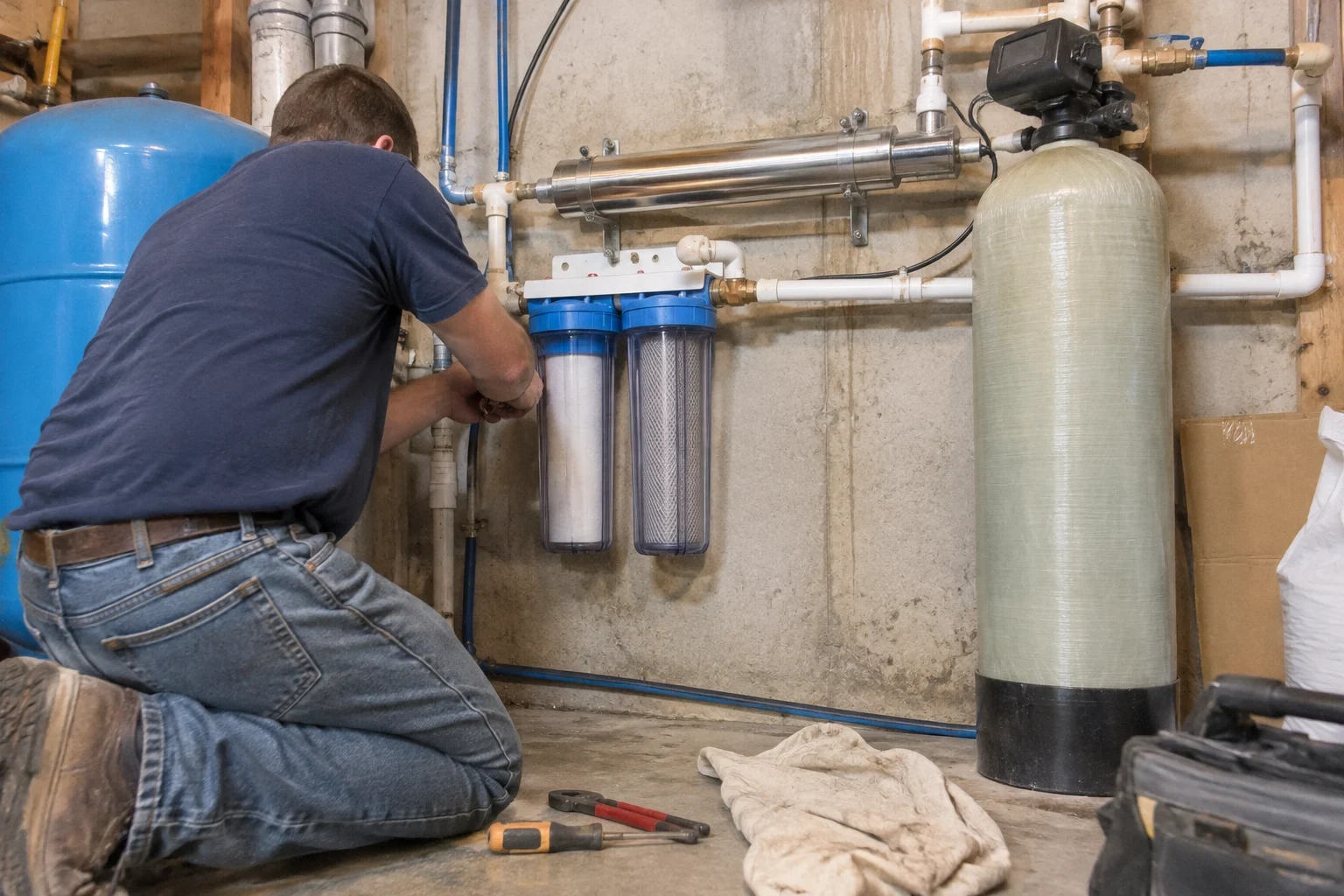
When a well needs more than a softener
Well water in southeast Wisconsin often comes up hard, and many wells also carry dissolved iron or manganese that turns orange or black once it meets air. Some carry hydrogen sulfide, the rotten-egg smell. A softener can manage a little iron, but heavier amounts foul the resin, and the stains keep coming back.
Well water treatment is the stage that comes before softening, or works alongside it. We usually pair an iron and sulfur filter, often an air-injection unit that oxidizes the iron so the media bed can catch it, with sediment filtration and, where the hardness calls for it, a softener downstream. If you also want cleaner drinking water at the kitchen tap, reverse osmosis finishes the job.
Many owners plan the install for late winter or early fall, ahead of the wet months when spring thaw and heavy rain can change what a well delivers. The work happens indoors, so the weather never holds it up.
What the work includes
A close look at your setup
We start with what you are seeing: stains, odor, scale and pressure. We check the pressure tank, the pump's flow rate and the space where the equipment will sit, and we read any recent lab results you already have on hand.
Iron and sulfur filtration
Air-injection and oxidizing media filters turn dissolved iron, manganese and sulfur into particles the bed can hold. On a set schedule, the unit backwashes that buildup to the drain.
Sediment protection
A sediment stage catches sand and grit before it can score valve seals, clog aerators or settle in your water heater.
Softening where it fits
When hardness is high, we place a softener after the iron filter so the resin stays clean and keeps working. Our Water Softeners page covers that equipment in more detail.
Careful, tidy installation
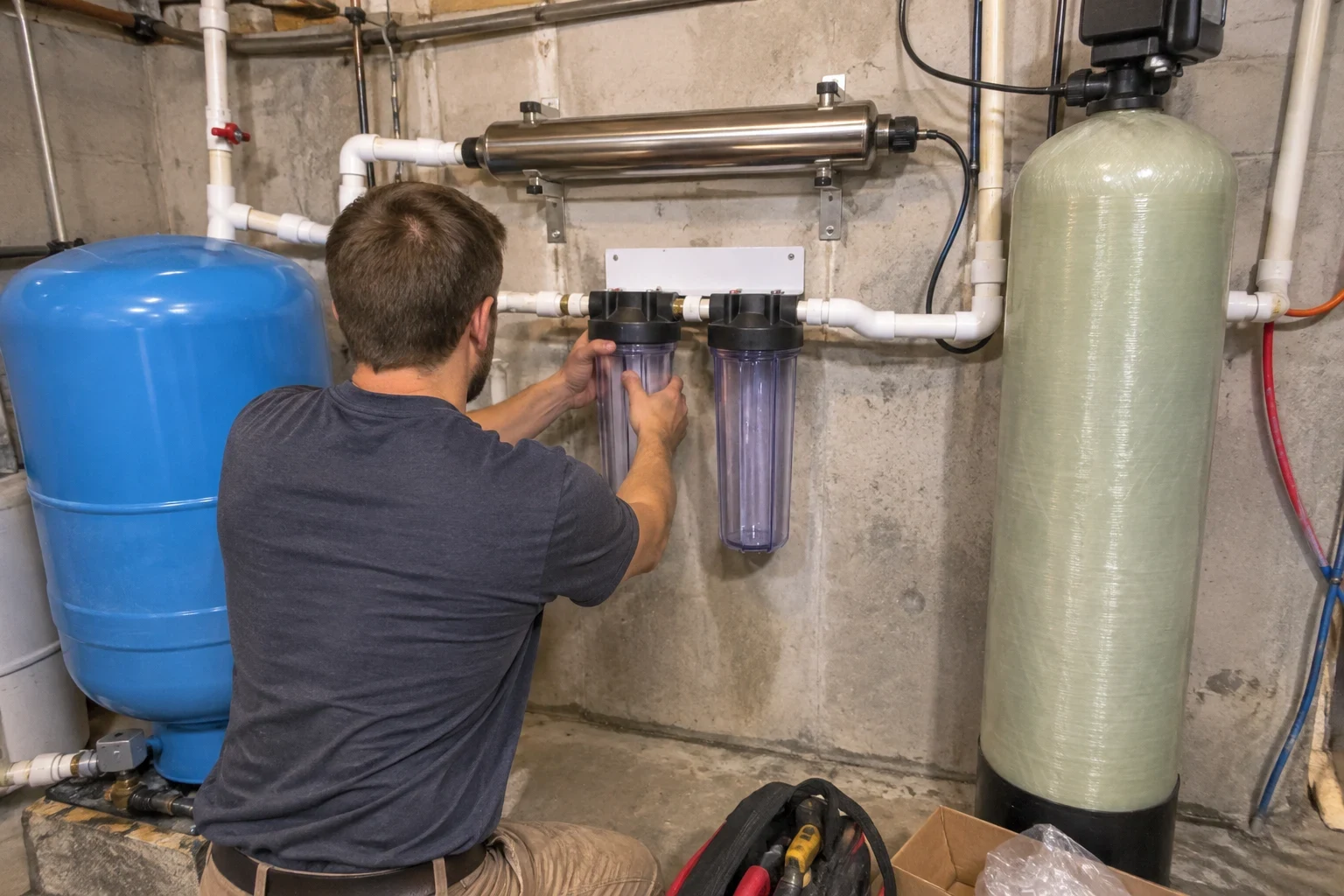
Every system gets a bypass valve, unions for future service and a drain line with a proper air gap. We lay down floor protection, keep the plumbing runs neat and leave the space clean.
Signs your well water needs treatment
- Orange or rust-colored stains
- Rings in toilets, streaks under faucets and tinted laundry usually point to dissolved iron.
- Black specks or gray film
- Manganese tends to leave darker staining and fine black particles in fixtures.
- A rotten-egg smell
- Hydrogen sulfide is often strongest when you first run the tap or on the hot side.
- A softener that can't keep up
- If you keep adding salt and still see stains, iron is likely fouling the resin bed.
- Grit or cloudy water
- Sand in aerators or water that looks hazy in a clear glass suggests the well needs sediment filtration.
How the work runs, start to finish
- 1
A conversation by phone
It begins with a call. We ask about your well, what you are noticing and how many people live in your home, then set a time to see the space and prepare your free quote.
- 2
A clear recommendation
We explain which stages your water needs and which you can skip, with each one listed on the quote. Your quote holds for 30 days, so there is time to think it over.
- 3
Install day
We protect the floor, close the main valve and mount the equipment in the order your water should pass through it. You'll know the shutoff window before the work starts, so you can plan showers and laundry around it.
- 4
Startup and walkthrough
We flush each stage, set backwash timing to your household's use and check every joint for leaks. Before we leave, we show you the bypass and what routine care looks like. Full payment is due when the install is complete.
What shapes the price
Well treatment varies more than city water treatment because every well is different. We price from what your water carries and how your home uses it, and each stage appears on the quote as its own line. Financing is available through U.S. Bank Avvance, on approved credit.
- What is in the water
- Light iron may need one filter. Heavy iron, manganese and sulfur together call for more capable media and sometimes an added stage.
- Flow rate and household size
- Equipment has to match your pump's output and your peak use, or pressure suffers. A bigger household usually means a larger tank.
- Number of stages
- Sediment, iron and sulfur removal, softening and drinking water each add equipment. We only include the ones your water needs.
- Space and existing plumbing
- Tight basements, older pipe that needs replacing near the tie-in, or a drain that must be extended all add time.
Well water treatment questions
- Can't my water softener handle the iron?
- A softener copes with a small amount of dissolved iron. Past that point, iron builds up on the resin, the softener loses capacity and the stains creep back. Putting an iron filter in front of the softener takes on the heavy lifting and keeps the resin working as it should.
- Will treatment get rid of the smell in my hot water?
- A sulfur filter strips hydrogen sulfide out of the water before it reaches your fixtures. When the odor appears on the hot tap but not the cold, the anode rod inside your water heater can be involved. In that case we say so directly instead of recommending equipment you have no use for.
- Does the system need power or a drain?
- Most iron filters and softeners plug into a nearby outlet and send their backwash to a drain. Your pump also needs enough flow to carry out that backwash, and we confirm it before suggesting any unit.
- When is the best time to install?
- The equipment lives indoors, so the calendar is open. Plenty of owners book for late winter or early fall, which lets the system settle in before the wet stretches that can unsettle a well.
- What happens if I have second thoughts?
- After you sign, you have three business days to cancel. We don't ask for payment until the installation is finished.
Ready your well for the months ahead
Describe what shows up at your tap and how your household uses water. On the call, we explain the financing options available and arrange a visit for your free quote.