ServicesWhole-Home Filtration
Whole-Home Filtration in Lake Geneva
One filter on the main line means every faucet, shower and appliance in your home runs on the same treated water. We size the system from your actual plumbing, fit it with clean, supported joints and leave the utility area as tidy as we found it.
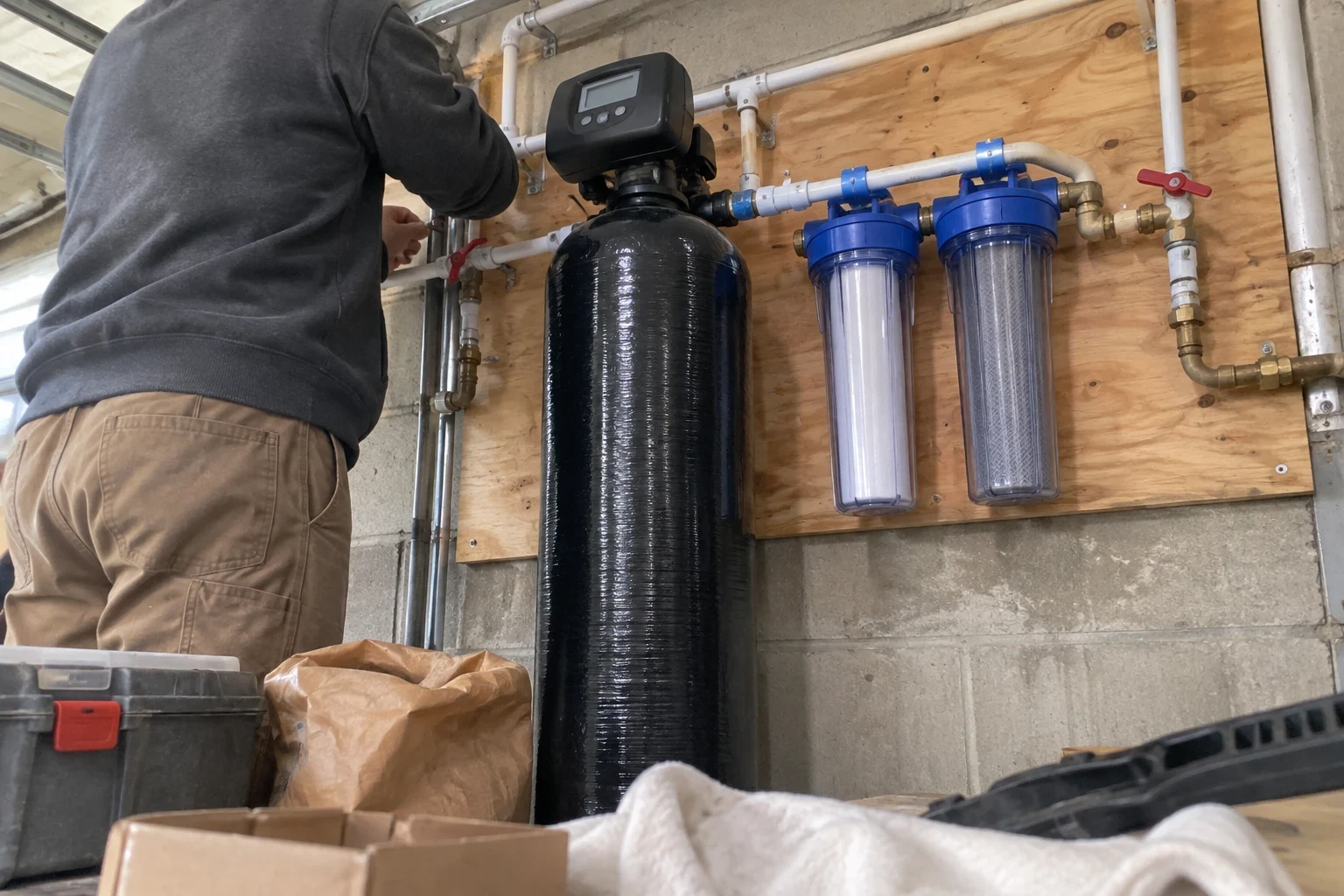
One filter for the whole house
A pitcher or faucet filter covers a single spot. A whole-home system is plumbed into the main line just past the point of entry, upstream of the water heater and every fixture. It works in two stages: a sediment filter first, then a tank of carbon media that captures chlorine along with the flavor and odor it brings.
The change is subtle but you notice it daily. The shower stops smelling like a pool, coffee tastes the way it should, and faucet screens stay clear of fine grit. Your water heater, washer and dishwasher take in less sediment year after year, too.
Timing matters to us. Spring, before a lake house opens for summer, and early fall, before the basement turns cold, both leave room to plan the work properly instead of squeezing it in.
What the work includes
- Main line assessment
- We locate where water comes into your home, note the pipe size and material, and make sure the tank fits with enough clearance to service it later.
- Sediment stage
- The first filter traps sand, scale flakes and grit before they reach the carbon, which keeps the media working evenly and extends its life.
- Carbon tank sized for peak use
- We size the tank for the busiest moment in your home's day, such as two showers and the dishwasher at once, so pressure holds steady. You will hear which media we picked and the reason for it.
- Bypass and neat pipework
- A bypass valve keeps water running if the system is ever serviced. Pipes are properly supported, joints are clean, and the layout is clear to whoever works on it next.
- First rinse and handover
- Before we pack up, the new media is rinsed through, each connection is inspected for drips, and we show you the bypass, the shutoff and the light upkeep the system needs.
Signs a whole-home filter makes sense
Chlorine you can smell
If the shower or a filled tub smells of bleach, the treatment chemicals in city water are reaching you at every tap, not just the kitchen.
Dry skin after showering
Some people notice their skin and hair feel better once chlorine is filtered out of the bathing water. It is a comfort change, and a common reason people call us.
Grit in screens and aerators
Sand or flakes collecting in faucet aerators and appliance inlet screens point to sediment that a prefilter would stop.
A pitcher filter in every room
When you are buying cartridges for the fridge, the kitchen and the bathroom sink, one system at the main line is often simpler to live with.
Planning other water work
If you are already adding a water softener or a reverse osmosis system, it is easy to add filtration on the same visit and keep the plumbing in one tidy line.
What shapes the price
Every main line is plumbed a little differently, so we set the price only after we have seen yours. The factors below are what move the number up or down. If you would rather pay over time, ask us about U.S. Bank Avvance financing, which is offered on approved credit.
System capacity
More bathrooms mean more water drawn at the same moment. That calls for a larger tank and more media, so pressure holds when everyone is getting ready at once.
Media choice
Standard carbon handles chlorine taste and odor well. Specialty blends cost more, and we recommend one only when your water gives a clear reason for it.
Plumbing and access
An open basement wall next to the main line keeps the job straightforward. A tight utility closet, an old pipe that ought to be replaced or a long run to the nearest drain adds labor.
Combining equipment
Installing filtration alongside a water softener or a reverse osmosis system means one round of plumbing serves both, which often brings the total down.
How an install unfolds
- 1
Start with a call
Describe what you taste or smell and how your plumbing is laid out. We go over system options and financing, then book a visit.
- 2
On-site look and written quote
We inspect the main line, settle on the right size and put the quote in writing. It stays good for 30 days, so there is time to think it over.
- 3
The install
Floors get covered first. We shut off the water, plumb in the system with its bypass and restore service as soon as the connections allow, so the house goes without water for only part of the day.
- 4
Rinse, inspect, tidy
We run the media until the water comes out clear, recheck every joint and clean the work area. You pay once the install is finished, not before.
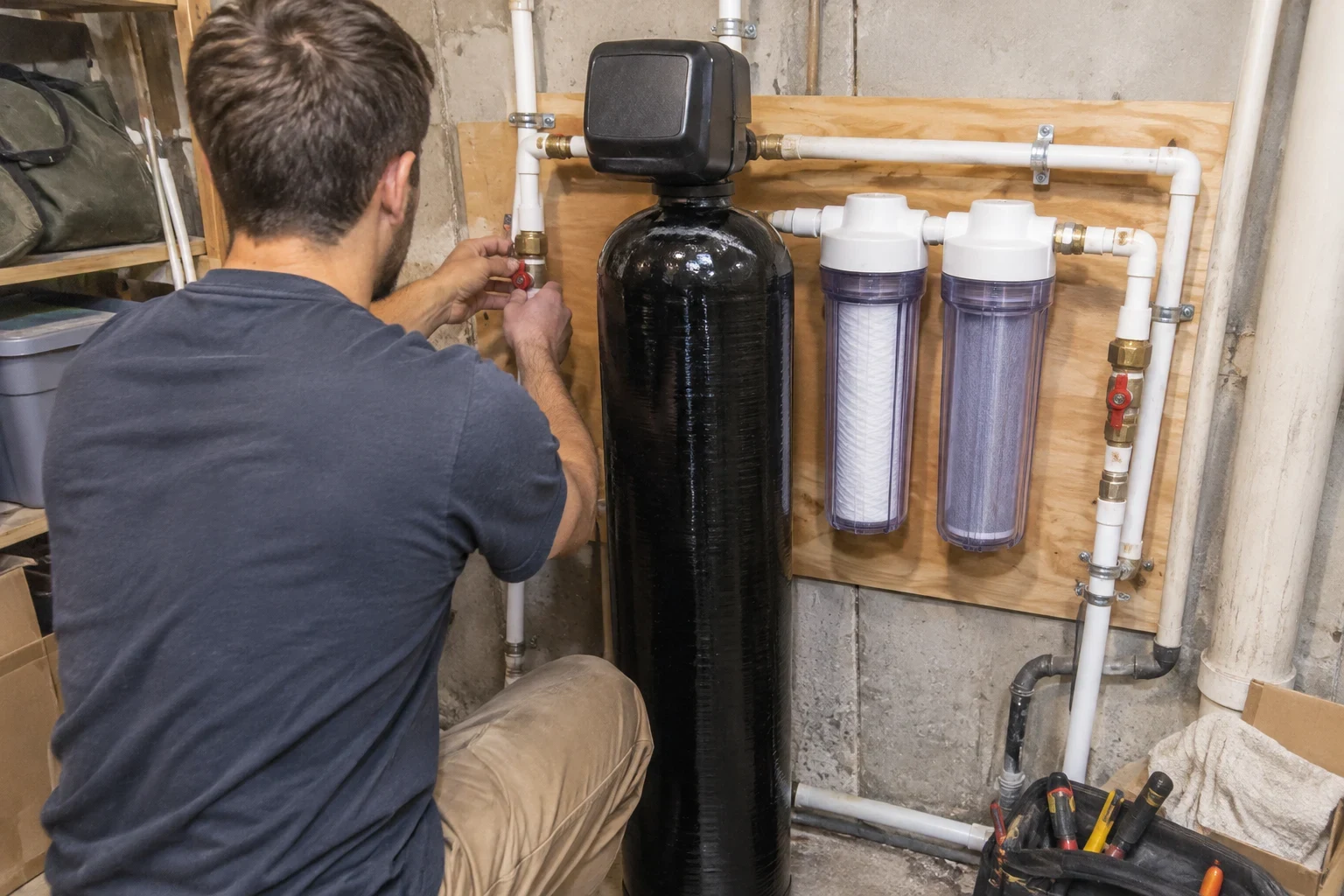
Whole-home filtration questions
Will my showers feel weaker after the filter goes in?
They should feel the same. We match the tank to the most water your home draws at one time, such as two showers running while the dishwasher fills. When people notice a drop, the usual cause is an undersized tank, and that is the reason we measure in person before quoting.
How much upkeep does the system need?
The sediment cartridge is changed periodically, more often if your water carries extra grit. The carbon media lasts much longer and is replaced every few years, depending on how much water your household uses. Before we leave, we show you what to watch for.
Do I still need a softener or reverse osmosis?
They solve different problems. Whole-home filtration takes out chlorine taste, odor and sediment. A water softener deals with hardness and scale, and reverse osmosis adds a finer stage of treatment at the kitchen tap for drinking and cooking. Many homes use two of them together.
Is this the right system for a private well?
On its own, usually not. Wells more often bring iron, a sulfur smell or hardness than chlorine, and those call for different equipment. Our well water treatment page covers the options, and we are happy to talk through your setup by phone.
Can I cancel after I sign?
Yes. You have three business days after signing to cancel. Your quote also holds for 30 days, so there is no pressure to decide while we are still in your basement.
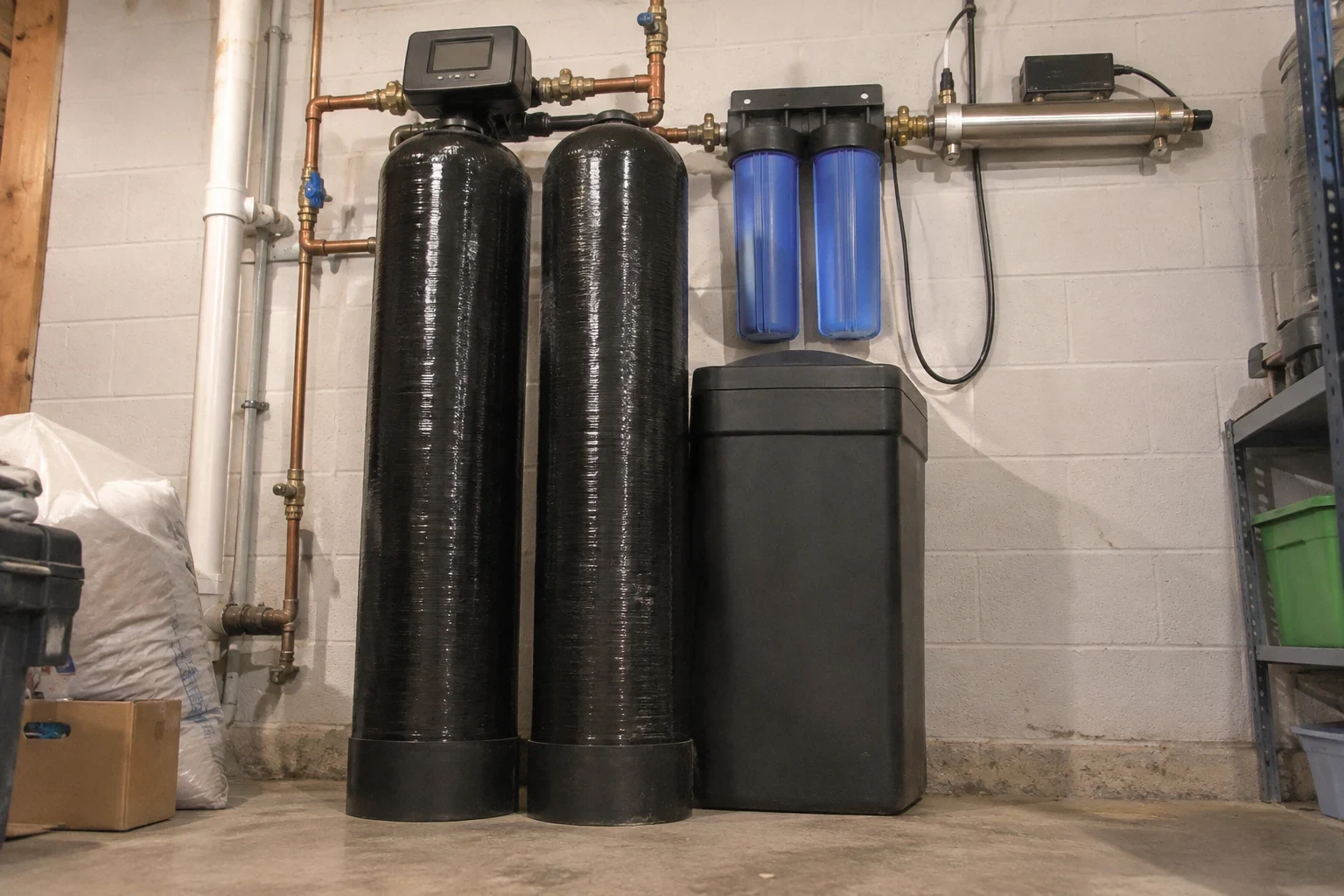
Ready for better water before the season turns
A short phone call gets you a free quote and clear information on financing. We will find an install day that fits around your plans.